The first posada I joined was in a narrow street in Mexico City, and I remember the cold candle wax dripping onto paper cups and the call-and-response song echoing between walls. Across the Americas, Christmas blends Spanish, Indigenous, African, Portuguese, British and French influences into customs that are unmistakably local. What links them is a love of gathering: few of these traditions can be done alone.
Mexico and Central America
- 16–24 Dec · Mexico
Las Posadas
For nine nights, often explained as the nine months of Mary's pregnancy, neighbours walk with candles behind figures of Mary and Joseph. At each house a group outside sings asking for shelter, and the group inside sings back refusing, until at last the door opens. Then come ponche, tamales and the piñata.
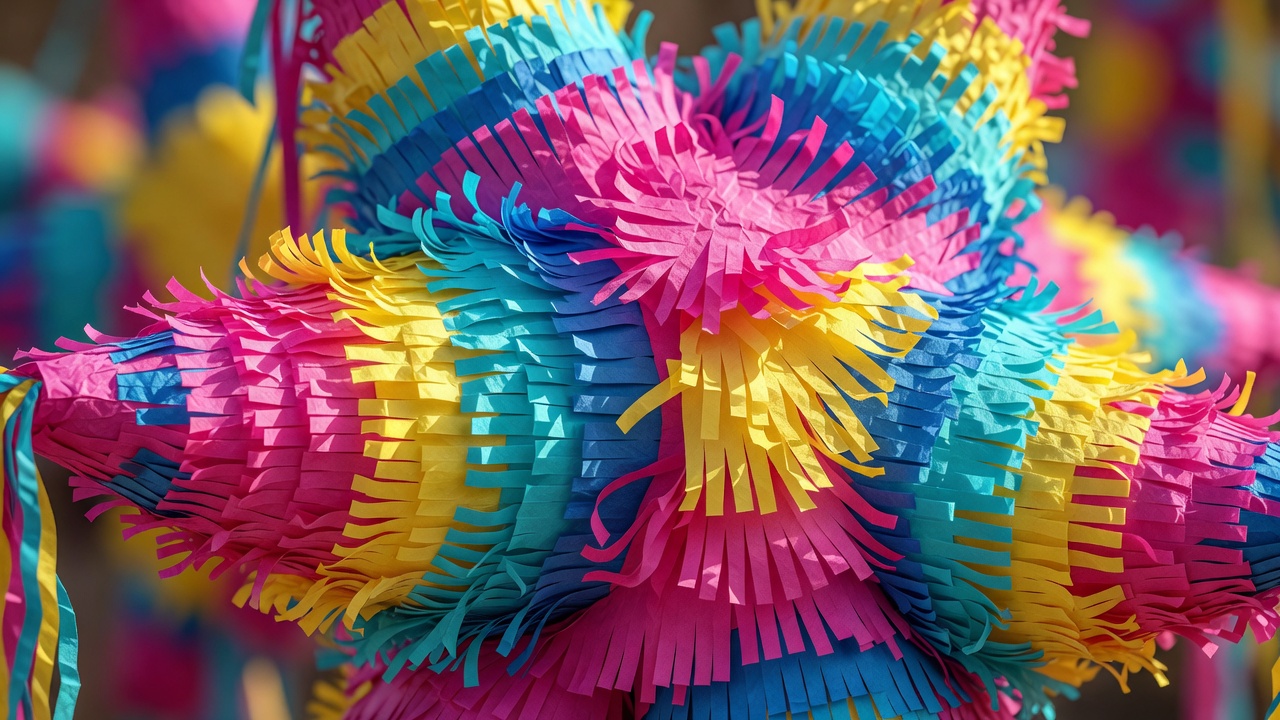
The classic piñata is a clay pot or paper sphere with seven cones. Striking it blindfolded is read as faith overcoming temptation, and the shower of fruit and sweets as the reward.
- 23 Dec · Oaxaca, Mexico
Night of the Radishes
Since 1897, Oaxaca's main square has hosted the Noche de Rábanos, where growers carve oversized radishes into nativity scenes, saints and village life. The carvings wilt within hours, so the whole city comes out on one evening to see them.
- 7 Dec · Guatemala
La Quema del Diablo
At six in the evening, families burn rubbish and devil effigies outside their homes to clear away bad things before the Feast of the Immaculate Conception. Many towns now use a single public effigy to reduce smoke.
The Caribbean and South America
- December to mid-January · Puerto Rico
Parrandas
A parranda is a musical ambush. Friends gather late at night with cuatro, guitar, maracas and güiro, creep up to a house and burst into aguinaldo songs until the hosts open up and serve food and coquito. Then the hosts often join and the group moves on. The island's season stretches all the way to the Fiestas de la Calle San Sebastián in mid-January. On the eve of Three Kings Day, children leave boxes of grass under their beds for the kings' camels.
- 7 Dec · Colombia
Día de las Velitas
On the night before the Immaculate Conception, families place candles and paper lanterns on doorsteps, pavements and balconies. Towns like Quimbaya hold lantern competitions, and the evening is widely seen as the opening of Christmas.
- 16–24 Dec · Venezuela
Roller skates to dawn mass
In Caracas, some neighbourhoods close streets in the early morning so people can roller-skate to the Misas de Aguinaldo, the pre-dawn Christmas masses. Gaita music and hallacas fill the rest of the season.
- 26 Dec and 1 Jan · The Bahamas
Junkanoo
Rooted in the celebrations of enslaved Africans, Junkanoo fills Nassau's Bay Street with goatskin drums, cowbells, brass and elaborate crepe-paper costumes in the early hours of Boxing Day and New Year's Day. Jamaica keeps a related tradition, Jonkonnu.
- 24 Dec · Brazil, Argentina
A midnight summer feast
In the southern summer, families in Brazil and Argentina gather for a late Christmas Eve supper and toast at midnight. Brazilians play amigo secreto, a secret-friend gift swap, and fireworks light up Argentine skies.
North America
- 24 Dec · New Mexico, USA
Farolitos
Paper bags weighted with sand and holding a candle line adobe walls and rooftops on Christmas Eve. In Santa Fe, crowds walk Canyon Road among thousands of them. Locals argue cheerfully over the names farolito and luminaria.
- Since 1933 · New York, USA
The Rockefeller Center tree
Construction workers set up a modest tree on the site in 1931; the first official lighting followed in 1933. The ceremony is now one of the most watched rituals of the American season.
- Twelve Days · Newfoundland, Canada
Mummering
Groups disguise themselves in lace curtains, oilskins and pillowcases, knock on doors and ask, "Any mummers 'lowed in?" Hosts must guess who they are before offering a drink. The custom came with settlers from England and Ireland and has been revived with festivals and parades.
Trying it at home
A simple posada needs only candles, a few neighbours and the willingness to sing at a door. Paper farolitos make a safe family craft with battery tea lights. If you hang a piñata, explain its meaning first; children remember the story far longer than the sweets.