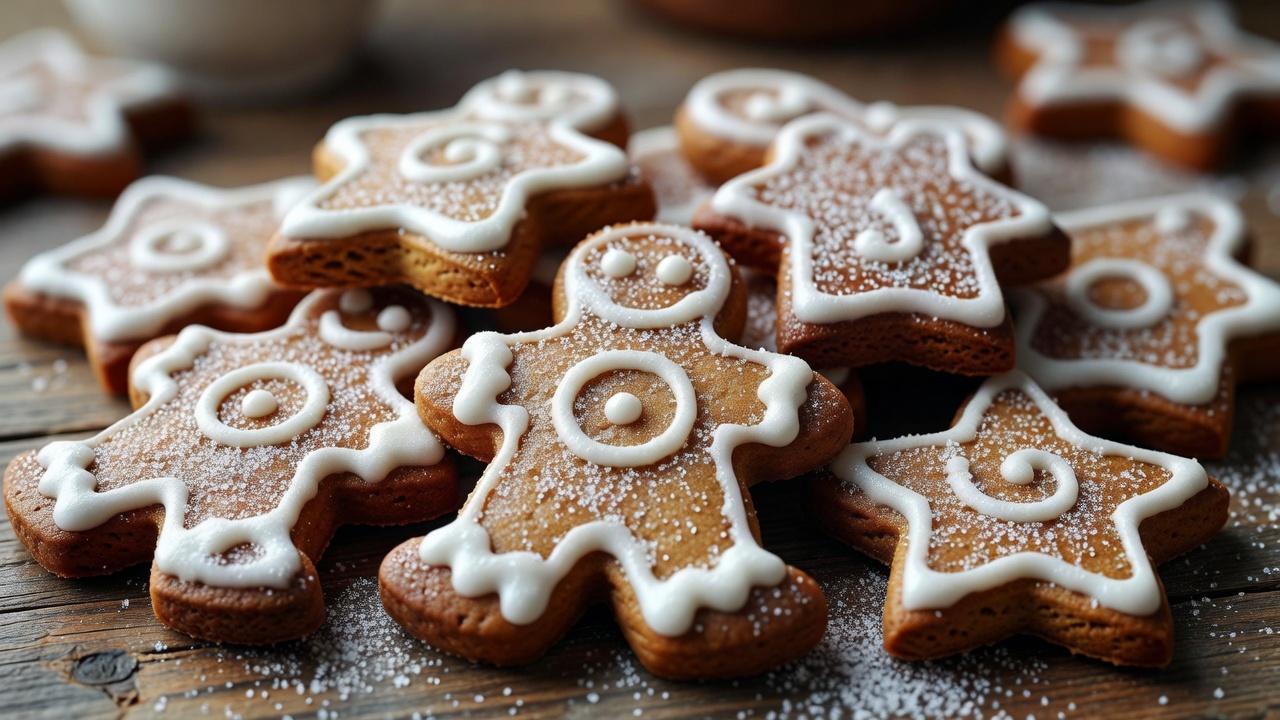
Ask anyone about Christmas in their childhood and within a minute they will describe a smell: oranges, cloves, roasting pork, frying dough, rum. Festive food tends to be made only once a year, so it carries memory more strongly than everyday cooking. Many of these dishes are also communal by design. Tamales and hallacas are assembled on long tables by several generations; Christmas puddings were once stirred by every member of the household. The tabs below gather the dishes we meet most often along the route.
Europe
Stollen · Dresden, Germany
A dense yeast loaf with dried fruit, often marzipan, buttered and buried in icing sugar to suggest a swaddled infant. Dresden celebrates it with an annual Stollenfest and a giant loaf paraded through the old town.
Panettone · Milan, Italy
A tall dome of airy dough with candied citrus and raisins, raised slowly over many hours. Its lighter northern cousin is pandoro from Verona, dusted with sugar like a snowy mountain.
Bûche de Noël and the thirteen desserts · France
The chocolate Yule log cake recalls the real log once burned in the hearth. In Provence, Christmas Eve ends with thirteen desserts, including nuts, dried fruit, nougat and fougasse.
Christmas pudding · United Kingdom
A steamed, dark fruit pudding traditionally mixed on Stir-up Sunday, the last Sunday before Advent, when everyone in the house takes a turn at the spoon and makes a wish.
Julbord and lussekatter · Sweden
The Christmas smörgåsbord gathers pickled herring, ham, meatballs and Jansson's temptation. Saffron lussekatter buns, curled into S shapes with raisins, belong to St Lucia's Day.
Kutia and carp · Ukraine and Poland
Wheat berries with poppy seed and honey open the Ukrainian Christmas Eve supper; in Poland, carp is a centrepiece, and some families keep a scale in their wallet for prosperity.
Americas
Tamales and ponche · Mexico
Corn masa filled with meat, chilli sauce or sweet fillings, wrapped in husks and steamed. Ponche navideño, a hot fruit punch with guava, tejocote and cinnamon, warms posada nights.
Rosca de reyes · Mexico
A ring-shaped sweet bread for 6 January, with a small figure of the infant hidden inside. Whoever finds it hosts a tamale party on Candlemas, 2 February.
Hallacas · Venezuela
Corn dough filled with a stew of meat, olives, raisins and capers, folded in plantain leaves and boiled. Families make them in batches of dozens and trade them with neighbours to compare recipes.
Coquito and pernil · Puerto Rico
Coquito is a creamy coconut drink with rum and cinnamon; pernil is slow-roasted pork shoulder with crackling skin, served with arroz con gandules.
Panettone with hot chocolate · Peru
Italian immigrants brought panettone to Peru, which now ranks among its biggest consumers. A slice is dunked in thick spiced hot chocolate, even in the southern summer.
Feast of the Seven Fishes · Italian-American
A Christmas Eve seafood supper rooted in the Catholic tradition of abstaining from meat before a feast day: baccalà, fried calamari, clams and more.
Asia & Africa
Lechón and bibingka · Philippines
A whole roasted pig with glassy skin is the Noche Buena showpiece. Bibingka, a rice cake baked in banana leaves, and purple puto bumbong are eaten after Simbang Gabi masses.
Christmas cake · Japan
A light sponge layered with whipped cream and crowned with strawberries, bought from bakeries and convenience stores alike on Christmas Eve.
Plum cake · Kerala, India
A dark, rum-soaked fruit cake, often shared with neighbours of all faiths during December.
Doro wat · Ethiopia
Chicken simmered for hours in berbere spice, onions and spiced butter, served with hard-boiled eggs on injera to break the Genna fast.
Jollof rice · Nigeria and Ghana
Rice cooked in a rich tomato and pepper base, made in large pots for Christmas gatherings; the friendly rivalry over whose version is best is part of the fun.
Malva pudding · South Africa
A spongy, caramelised baked pudding soaked in a warm cream sauce, often served after a Christmas braai.
Oceania
Pavlova · Australia and New Zealand
A crisp meringue shell with a soft centre, piled with cream, passionfruit, kiwifruit and berries. Both countries claim it, and the debate is half the tradition.
Prawns and seafood · Australia
Fish markets in Sydney and Melbourne open around the clock before Christmas as families queue for prawns and oysters to eat cold in the heat.
Glazed ham, cherries and mangoes
A baked ham often lasts through the holiday as sandwiches, while Australian cherries and mangoes are at their summer best.
Hāngī · New Zealand
Some Māori whānau mark large holiday gatherings with a hāngī, food slow-cooked on heated stones in an earth oven.
Cooking across cultures
If you try a dish from another tradition, look for a recipe written by someone from that community, and keep its name. Hallacas are not "Venezuelan tamales", and a rosca is not a generic sweet bread. Cooking with children is the gentlest way in: everyone can fold a husk, fill a leaf or crack a meringue.